Old home wiring does not fail suddenly. It degrades over decades as insulation dries out, connections loosen, and the system struggles under the demands of modern appliances. In Epping and Carlingford, where many homes were built between the 1930s and 1980s, ageing wiring is one of the most common hidden safety risks homeowners face.
Most of those homes have never had their wiring professionally assessed. The cables behind the walls are original, and the switchboard hasn’t changed since the house was built. PowerHub Electrical services homes across Epping, Carlingford, and surrounding suburbs. This guide covers how wiring ages, what warning signs to look for, which cable types are most common in your area, and when to call a licensed electrician.
Why Older Wiring Cannot Keep Up With Modern Homes
The wiring installed in homes in Epping and Carlingford decades ago was designed for a fraction of today’s electrical demand. In the 1950s and 1960s, a typical household ran a few lights, a refrigerator, and a radio. Modern homes run air conditioning, induction cooktops, EV chargers, home offices, and a full suite of kitchen appliances simultaneously.
According to the NSW Government, electrical faults and appliances cause around 40% of house fires in NSW each year. Many of those fires are traced to wiring that was never designed to carry today’s loads, or that has deteriorated past safe use.
The current mandatory compliance standard for all electrical work in Australia is AS/NZS 3000:2018. The home wiring safety requirements it sets simply did not exist when most older Epping and Carlingford homes were first wired. Wiring runs through walls and roof spaces where no one looks, and a system can deteriorate silently for years before anything obvious appears.
What Wiring Types Are Found in Older Homes
The type of wiring in your home depends almost entirely on when it was built. Each generation of cabling has different characteristics and different failure modes.
| Build Era | Wiring Type | Key Risk | Common Suburbs |
| Pre-1960 | VIR (Vulcanised Indian Rubber) | Rubber crumbles, exposing live conductors | Epping, Eastwood, Beecroft |
| 1940s to 1960s | TRS (Tough Rubber Sheathed) | No earth wire, rubber deteriorates | Carlingford, Pennant Hills |
| 1960s to 1980s | Early PVC and TPS | May lack earth wires, insulation becomes brittle | Carlingford, Dundas Valley |
| Post-1980s | Modern TPS | Safer but subject to load stress and connection failure | All suburbs |
VIR cable. Vulcanised Indian Rubber cable was standard in Australian homes from the early 1900s to the late 1950s. The rubber insulation dries out and crumbles over time, exposing live copper conductors. The VIR cable also lacks an integrated earth conductor, a critical safety gap by today’s standards.
TRS cable. Tough Rubber Sheathed cable was used from the 1940s to the early 1960s. It shares the same rubber degradation problem as VIR and frequently lacks an earth wire, leaving many circuits without earthing continuity. It is one of the highest fire-risk cable types still found in Australian homes.
Early PVC and TPS cable. From the late 1950s into the 1980s, wiring transitioned to PVC-insulated, thermoplastic-sheathed cable. These cables were often installed without proper earth wires and were not rated for today’s electrical loads. Carlingford, which developed rapidly through the 1960s and 1970s, commonly has this generation of wiring.
Modern TPS. Homes built after the early 1980s generally have thermoplastic sheathed cabling with a proper earth conductor. These systems are safer, but they remain subject to connection failures and switchboard deterioration, particularly where no safety switches have been added since installation.
Warning Signs Your Home Has Old or Unsafe Wiring
Your home’s electrical system gives clear signals when something is wrong. Recognising them early prevents a minor fault from becoming a serious hazard.
Lights that flicker or dim unexpectedly
Flickering across multiple rooms usually points to a loose connection, overloaded circuit, or deteriorating wiring. A single flickering bulb is likely just the bulb. Widespread flickering or dimming when appliances switch on requires professional investigation.
Circuit breakers that trip repeatedly
A breaker that trips regularly on the same circuit, without obvious overloading, means the wiring cannot handle the current demand. This is especially common in older homes, where a single circuit now serves a kitchen or home office that draws far more power than it did decades ago.
Warm or discoloured power points
Power points that feel warm, show brown or black discolouration, or have cracked faceplates indicate overheating at the connection point. Discolouration means heat has already been generated there. Stop using that outlet and call a licensed electrician.
A burning smell near the switchboard or outlets
An unexplained burning smell near the switchboard or a power point means wiring insulation is overheating. Turn off the circuit at the switchboard if you can identify it, and call an electrician immediately.
Ceramic fuses in the switchboard
If your switchboard still has ceramic fuses, your home’s protection has not been upgraded since at least the 1970s. Ceramic fuses offer no protection against earth leakage faults and expose live parts when replaced, creating a direct electrocution risk.
No safety switches on your circuits
Safety switches, also called residual current devices (RCDs), detect earth leakage and cut power in milliseconds. Properties built before 2000 often have no safety switches at all. Test the button on each RCD in your switchboard. If nothing trips, contact a licensed electrician.
More: What Is a Safety Switch and Do You Need One?
Why Epping and Carlingford Homes Are Particularly Affected
The housing stock across these suburbs spans nearly a century of development. Wiring types and risk profiles vary significantly by street and era. Here is what I commonly find by location.
- Pre-war Federation and Californian Bungalow homes in Epping (1910s to 1940s). These are the highest-risk properties. Many still carry sections of original VIR cabling that has long exceeded its safe service life. Roof spaces often show crumbling black rubber insulation on live cables.
- Post-war brick veneer homes in Carlingford (1950s to 1970s). Carlingford developed rapidly after World War II, with most of its housing stock built in the 1960s and 1970s. These homes were wired with TRS or early TPS cabling, often without earth conductors on lighting circuits.
- Homes in Eastwood and Beecroft were built in the 1950s and 1960s. These suburbs share a similar housing era to Carlingford. TRS cabling is the most common finding in homes from this period that have not been partially rewired.
- Units and townhouses in Ryde and West Ryde were built between the 1960s and the 1980s. Many of these installations lack safety switches on lighting circuits and have switchboards that were never upgraded to handle modern load demands.
- Homes in Pennant Hills and Denistone have unrenovated wiring dating back to the 1970s. The cabling in these homes may be in reasonable condition, but the switchboard, earthing system, and absence of safety switches are the primary concerns.

What an Electrician Does When Assessing Old Home Wiring
When I assess an older home for wiring condition, I follow a structured process that works from the switchboard outward. In over a decade of servicing homes across Epping, Carlingford, and surrounding suburbs, this approach identifies the cause and the scope every time.
How I assess old wiring in Epping and Carlingford homes
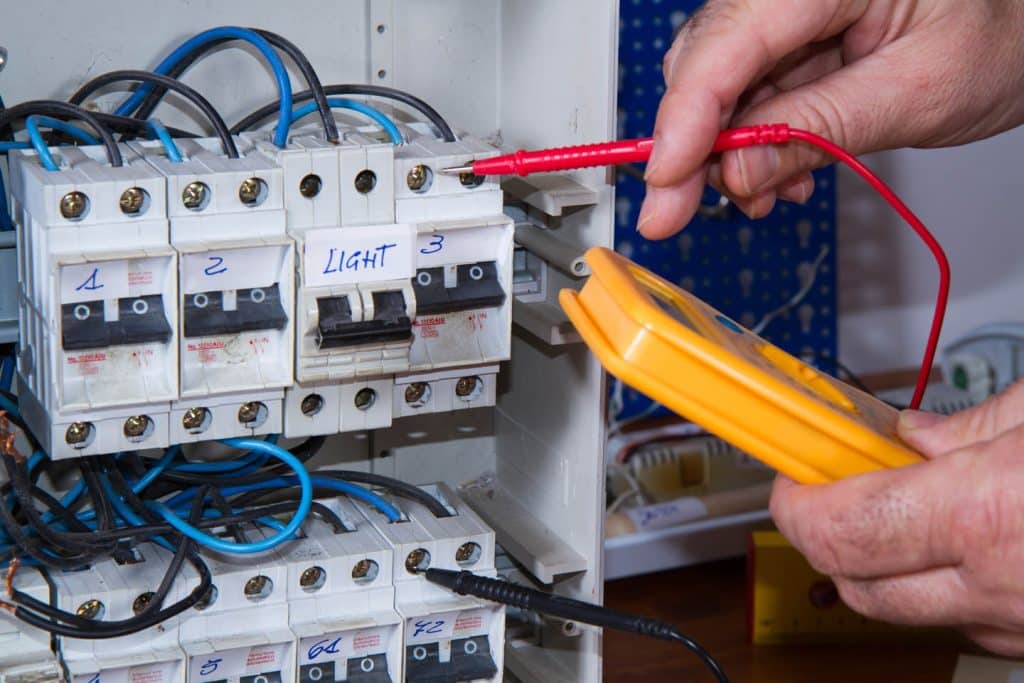
I start at the switchboard, checking the age and type of the board, the condition of all circuit breakers and fuses, and the presence and coverage of safety switches.
From there, I inspect accessible cabling in the roof space, looking for rubber insulation, damaged sheathing, and signs of heat damage. I then test each circuit for continuity, insulation resistance, and earth loop impedance.
Power points and switches are checked for discolouration, loose fittings, and warm contacts. The earthing system is checked at the main earth stake and throughout the switchboard. You receive a clear written report of every finding, prioritised by severity, with a fixed-price quote before any work begins.
*More: What Does an Electrical Safety Inspection Include?
How to Protect an Older Home’s Electrical System
Protecting an older home’s wiring is a sequence of steps, not a single job. Each one reduces risk at a different level.
Have the wiring assessed before anything else
A thorough electrical wiring inspection by a licensed electrician establishes the actual condition of cables, switchboard, and earthing before any upgrade work begins. For homes built before 1980 in Epping and Carlingford, this should always be the first step.
Upgrade the switchboard before adding new loads
If you are planning to install an EV charger, ducted air conditioning, or additional circuits, the switchboard must be assessed first. A switchboard upgrade also adds RCD protection to all circuits, which is the most effective single step against electrocution and electrical fire.
Prioritise a full rewire for pre-1970 homes
For homes still carrying original VIR or TRS cabling, a full home rewire is the safest long-term solution. House rewiring in Epping and Carlingford — and across greater Sydney — replaces all original cabling with modern TPS cable, installs earth conductors on every circuit, and brings the installation into compliance with AS/NZS 3000:2018.
Test safety switches every six months
Press the test button on each RCD in the switchboard. If it does not trip instantly, call a licensed electrician. If your switchboard has no safety switches at all, installing them is the most urgent upgrade needed.
PowerHub Electrical recommends scheduling a professional assessment every three to five years for homes older than 25 years. For homes with known rubber-insulated wiring or a ceramic fuse board, do not wait.
After completing a complex rewire on a 1930s home in the area, Ian Brown shared this feedback:
“Brian and William did a sensational job. Our project was a large and complex Rewire of Power and Lighting circuits, Earth replacement and Meter Box Upgrade. Being a 1930’s house this meant a lot of non-compliant older wiring and fusing had to be analysed and a plan made to upgrade the system and bring it up to modern standards, while minimising disruption to our day to day life. Brian planned the whole job with meticulous detail. The project was completed on time and budget and they were tidy and neat during the whole process, we couldn’t have been happier.” Ian Brown
That level of planning and transparency is what a rewire of an older home demands.
*More: How to Spot Signs of Faulty House Wiring

Areas We Service
PowerHub Electrical services homes and businesses across Parramatta and the greater western Sydney region, including Epping, Carlingford, Ryde, Eastwood, Beecroft, Dundas Valley, West Ryde, Marsfield, Macquarie Park, Pennant Hills, Denistone, Telopea, West Pennant Hills, Turramurra, and Melrose Park. Whether your home has ageing rubber-insulated wiring in Epping or an unupgraded switchboard in Carlingford, our licensed electricians will assess the condition and give you a clear plan.
Get Your Home’s Wiring Assessed Today
If your home is more than 25 years old and has never had a professional electrical assessment, call PowerHub Electrical on 0400 332 331 or contact us online.
- Same-day service available across Epping, Carlingford, and surrounding suburbs
- $50 off your first service
- 15% pensioner discount on all electrical work
- 24/7 emergency response for urgent faults
- Licensed, insured, and local
Don’t wait for something to go wrong. An older home’s wiring should be assessed before it becomes an emergency.
Frequently Asked Questions
How long does electrical wiring last in an Australian home?
There is no fixed lifespan, but VIR and TRS rubber-insulated cables used in homes built before the 1970s have a documented service life of around 30 years. Many of these cables in Epping and Carlingford are now 50 to 80 years old. Modern TPS cabling can last 40 to 50 years under normal conditions, provided connections remain sound and the system is not overloaded.
Is it dangerous to leave old wiring in place if nothing has gone wrong yet?
Yes. Deteriorated VIR or TRS wiring may appear functional while silently exposing live conductors inside wall cavities and roof spaces. Fires caused by deteriorated wiring often start in concealed locations with no visible warning beforehand. The absence of obvious faults is not confirmation that the system is safe.
Do I need to rewire my entire home if I have old wiring?
Not necessarily. A licensed electrician will assess whether the cabling is deteriorated enough to require full replacement or whether sections can be isolated and replaced selectively. For homes with VIR or TRS cabling where rubber insulation has started to crumble, a full rewire is usually recommended.
How much does it cost to rewire a home in Sydney?
Rewiring costs depend on the size of the property, the number of circuits, the accessibility of cabling, and whether a switchboard upgrade is included. PowerHub Electrical provides upfront fixed-price quotes before any work begins, with no unexpected charges on completion.
Can I sell my home without upgrading old wiring?
Yes. NSW does not legally require a wiring upgrade before selling. However, a pre-purchase inspection requested by the buyer may identify old wiring as a defect, which can affect the sale price. Upgrading before listing removes that issue entirely.
What is the difference between a switchboard upgrade and a full rewire?
A switchboard upgrade replaces the meter box, circuit breakers, and safety switches at the main panel but leaves existing cables in place. A full rewire replaces all cabling throughout the home. Many older homes need both, with the switchboard upgraded first to provide immediate circuit protection.
Is DIY wiring legal in NSW?
No. All fixed electrical work in NSW must be carried out by a licensed electrician. A licensed electrician must also issue a Certificate of Compliance for Electrical Work (CCEW) for all completed work. DIY electrical work is illegal regardless of the scope.
How do I know if my home still has rubber-insulated wiring?
The most reliable way is a professional inspection. If you can safely access the roof space, look for black or brown rubber-coated cables without a modern PVC sheath. If the switchboard still has ceramic fuses, the wiring likely dates from the same era. If your home was built before 1970 and has never had an electrical inspection, assume rubber-insulated wiring is present until an electrician confirms otherwise.