Pennant Hills homes face a higher risk of power surges than most Sydney suburbs because of three compounding factors: overhead power lines running through heavily treed terrain, elevated geography that increases lightning exposure, and older housing stock with wiring not designed to handle transient voltage spikes. Without surge protection, a single storm event can destroy thousands of dollars’ worth of electronics and appliances in seconds.
Most homeowners in Pennant Hills, Beecroft, and West Pennant Hills have experienced storm-related outages but haven’t considered what those events do to their electrical systems beyond the lights going out. PowerHub Electrical services homes across Pennant Hills and surrounding suburbs. This guide covers why this area is particularly exposed, what power surges do to your home, and how to protect it properly.
Why Pennant Hills Sits in a High-Surge Zone
Pennant Hills and its neighbouring suburbs sit in one of Sydney’s most consistently storm-affected corridors. The combination of elevation, tree canopy, and overhead network infrastructure creates conditions that amplify surge risk well beyond those experienced in inner Sydney suburbs.
Ausgrid, which manages the electricity network across Pennant Hills, Beecroft, and West Pennant Hills, has publicly confirmed that Sydney’s north and Hills District have been among the hardest-hit areas during major storm events.
In one significant storm, Ausgrid crews responded to close to 500 dangerous hazards across the network, with Pennant Hills, West Pennant Hills, Beecroft, Cherrybrook, and Thornleigh specifically named as the worst-affected areas. Hazards included fallen trees on power lines, snapped power poles, and direct lightning strikes on the overhead network.
Every one of those events sends voltage spikes through the lines and into connected homes. Without a surge protection device installed at the switchboard, that energy travels directly into your appliances, wiring, and electronics.
What Causes Power Surges in Pennant Hills Homes
Surge risk in Pennant Hills comes from three distinct sources. Each operates differently and causes a different type of damage.
Lightning strikes to the overhead network
Lightning does not need to strike your home directly to cause surge damage. A strike anywhere on the overhead network in your area sends a massive voltage spike through the lines.
Homes in Pennant Hills and Beecroft sit on elevated terrain with significant tree canopy and overhead line infrastructure, which increases exposure to lightning-induced surges compared to suburbs with underground cabling. These surges can exceed tens of thousands of volts and are the most destructive type.
Grid switching events
Every time Ausgrid switches circuits, reroutes power, or restores supply after an outage, a transient voltage spike travels through the network. These events are smaller than lightning surges but happen far more frequently, including after every storm-related outage in the area. Over time, repeated small surges degrade the internal components of appliances and electronics without any visible sign of damage until the device fails.
Appliance motor switching inside your home
Air conditioners, pool pumps, refrigerators, and washing machines all draw a large inrush current when their motors start. When the motor shuts off, the stored energy in the circuit generates a brief voltage spike. This happens multiple times daily in every home and is a source of low-level surge activity that gradually shortens the lifespan of sensitive electronics.
More: What Causes a Power Surge and How To Protect Your Home?
Why Older Pennant Hills Homes Are More Vulnerable
The elevated surge exposure in this area combines with a specific characteristic of the local housing stock to create a compounding risk. Here is what I commonly find across the area.
- Pre-war and early post-war homes in Pennant Hills (1940s to 1960s). Homes in this era, including Californian Bungalows and early double-brick dwellings, retain original or partially upgraded wiring, with insulation that has dried out and thinned over decades. Degraded insulation has a reduced ability to withstand transient voltage spikes, increasing the risk of arcing and fire when a surge occurs.
- Brick veneer homes in West Pennant Hills (1970s to 1980s). West Pennant Hills developed rapidly through the 1970s and 1980s, and most of its housing stock dates from this period. These homes typically have switchboards that were never upgraded to include surge protection, and many lack spare breaker space to accommodate a surge protection device without a partial board upgrade.
- Established homes in Beecroft (1950s to 1970s). Beecroft’s housing stock spans several decades of development, with significant overhead line infrastructure serving the suburb. Homes in this suburb are directly connected to the Ausgrid network that has been documented as among the most storm-damaged in greater Sydney.
- Homes in Denistone and Carlingford with original switchboards. Properties in these suburbs built in the 1960s and 1970s often have switchboards that are full, with no spare capacity for a surge protection device without a board upgrade first. A full switchboard is one of the most common reasons surge protection has not been installed in older homes.
- Homes with smart technology, solar inverters, and home offices across the region. Modern electronics are far more sensitive to voltage spikes than the appliances in use when these homes were built. A surge that would have caused a blown fuse in 1975 will destroy a solar inverter, smart TV, computer, or modem in 2025.

What Surge Damage Looks Like in Your Home
Power surge damage is not always immediate or obvious. Understanding the signs helps you identify whether your home has already suffered surge-related deterioration.
- Appliances that fail early or behave erratically. Repeated small surges gradually degrade internal components over time. A fridge compressor failing after six years, a television developing display issues, or a modem needing replacement annually may all reflect cumulative surge damage rather than normal wear.
- Tripped breakers after a storm. Circuit breakers that trip during or immediately after a storm may be responding to a voltage spike rather than an overload. Without a surge protection device, your breakers are the only barrier between a surge and your appliances.
- Burnt or discoloured power points. Voltage spikes at the outlet level cause localised heat damage, visible as discolouration or a faint burning smell. This is a direct sign that surge energy has passed through that point. Stop using the outlet and call a licensed electrician.
- Solar inverter faults after storms. Solar inverters operate within a narrow voltage range and are among the most surge-sensitive devices in a modern home. Inverter error codes appearing after storm events are often surge damage, not inverter failure. Replacement can cost $2,000 or more, making a whole-house SPD one of the best-value protections available.
What a Licensed Electrician Does to Protect Your Home
When I assess a Pennant Hills home for surge protection, I follow a structured process to match the right level of protection to the property’s specific risk profile. Over more than a decade of servicing homes across Pennant Hills, Beecroft, and surrounding suburbs, this approach has identified the correct solution every time.
How I assess and install surge protection in Pennant Hills homes
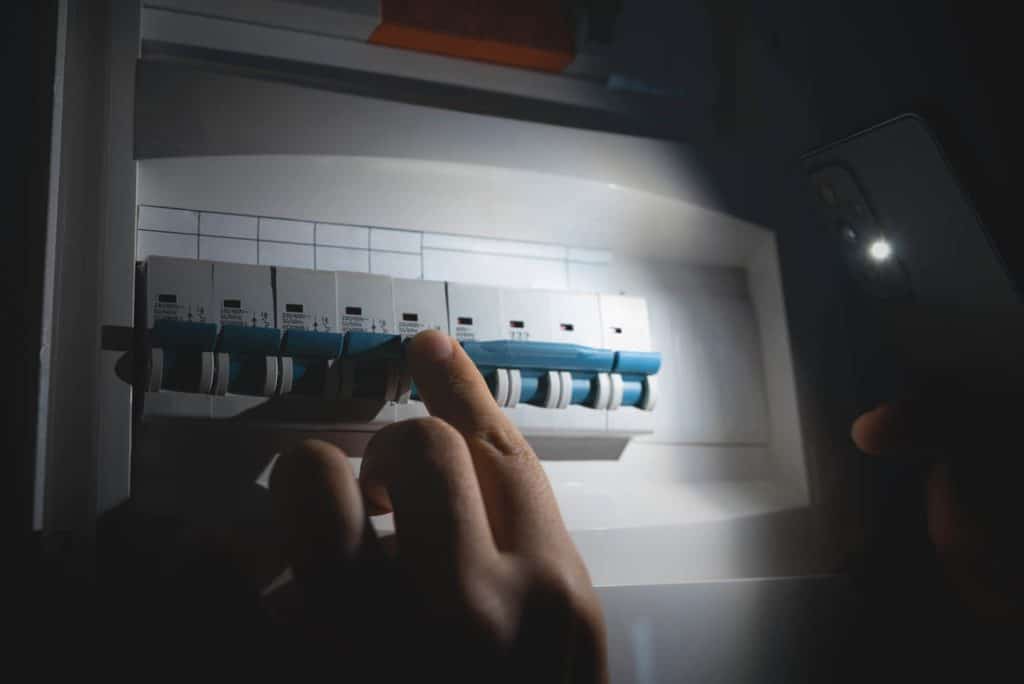
I start at the switchboard, confirming the board’s age, capacity, and whether spare breaker space is available for a surge protection device. I also check the earthing system, as an effective earth connection is essential for an SPD to function correctly.
From that assessment, I select the correct SPD type and rating. Under AS/NZS 3000:2018 Appendix F, a Type 2 SPD installed at the main switchboard is the recommended minimum for residential homes in areas with overhead supply lines and elevated lightning exposure. For homes with solar inverters or sensitive home office equipment, a layered approach using a switchboard SPD and point-of-use protection is more appropriate.
The SPD is installed after the main switch but before any RCD, per the standard’s requirements. I then issue a Certificate of Compliance for Electrical Work (CCEW) covering the installation. You get a clear explanation of what was installed, how to check the SPD’s indicator light, and when to consider replacement.
More: Safety Switch Keeps Tripping? What It Means and How to Fix It
How to Maintain Surge Protection in Your Home
A surge protection device is not a set-and-forget installation. A few simple habits keep your protection effective long-term.
Check the SPD indicator light after every major storm
Most Type 2 SPDs have a status indicator light, usually green for active and red for depleted. After any significant storm event, check the indicator before assuming your protection is still in place. A depleted SPD provides no protection. If the light has changed, contact a licensed electrician to arrange a replacement cartridge.
Have the SPD and earthing inspected annually
SPD effectiveness depends on a solid earth connection. PowerHub Electrical recommends an annual check of the SPD condition, earthing resistance, and switchboard connections, particularly for homes in Pennant Hills and Beecroft that experience repeated storm events through the year. This check takes under an hour and confirms your protection is still performing as installed.
Use quality point-of-use surge protectors as a second layer
A whole-house SPD at the switchboard handles large external surges. For computers, televisions, and smart home equipment, a quality point-of-use surge protector powerboard adds a secondary layer of protection. Never rely on a cheap powerboard alone. It is not a substitute for a switchboard-level SPD.
PowerHub Electrical recommends scheduling a surge protection check every two years for homes in Pennant Hills, Beecroft, and West Pennant Hills, particularly after a severe storm season.
After a recent job in the area, Kellie Scott shared this feedback:
“Highly recommend Brian and his team. His workmanship is outstanding, as is his communication. Nothing was too much trouble, and the jobs were completed very promptly. Will definitely use again!” Kellie Scott
That standard of workmanship and communication is what every electrical job in your home deserves.
More: What Is a Safety Switch and Do You Need One?

Areas We Service
PowerHub Electrical installs surge protection devices and services homes across Parramatta and the greater western Sydney region, including Pennant Hills, West Pennant Hills, Beecroft, Epping, Carlingford, Ryde, Eastwood, Dundas Valley, West Ryde, Marsfield, Macquarie Park, Denistone, Telopea, Turramurra, and Melrose Park. Whether your home needs a new surge protection device or a switchboard upgrade first, our licensed electricians will assess your property and give you a clear plan.
Protect Your Pennant Hills Home From Power Surges
If your home has no surge protection and you want to safeguard your electronics, wiring, and appliances, call PowerHub Electrical on 0400 332 331 or contact us online.
- Same-day service available across Pennant Hills and surrounding suburbs
- $50 off your first service
- 15% pensioner discount on all electrical work
- 24/7 emergency response for urgent faults after storms
- Licensed, insured, and local
A whole-house surge protection device costs far less than replacing what a single surge can destroy.
Frequently Asked Questions
Why are Pennant Hills homes more prone to power surges than other Sydney suburbs?
Three factors combine in Pennant Hills: elevated terrain that increases lightning exposure, significant overhead power line infrastructure that transmits surge energy directly into homes, and older housing stock with wiring not designed to absorb transient voltage spikes. Ausgrid has confirmed this area as among Sydney’s most storm-affected, with Pennant Hills, West Pennant Hills, and Beecroft regularly named in major outage events.
What is a surge protection device and how does it work?
A surge protection device (SPD) is installed at your main switchboard and monitors incoming voltage. When a spike above the safe operating threshold is detected, the SPD clamps the voltage and diverts the excess energy safely to earth before it reaches your appliances and wiring. A Type 2 SPD at the switchboard is the recommended minimum for homes in Pennant Hills under AS/NZS 3000:2018 Appendix F.
Is surge protection mandatory for homes in NSW?
Surge protection is not currently mandatory for all residential properties under AS/NZS 3000:2018. However, the standard recommends SPD installation for homes in areas with overhead supply lines, elevated terrain, high lightning exposure, or sensitive electronic equipment. All three of these conditions apply to most homes in Pennant Hills, West Pennant Hills, and Beecroft.
How much does surge protection installation cost in Pennant Hills?
A Type 2 SPD installed at a residential switchboard in the Pennant Hills area typically costs between $300 and $600, covering the device and installation. If a switchboard upgrade is needed to accommodate the SPD, total costs will be higher. PowerHub Electrical provides a fixed-price quote after a site assessment, with no hidden costs.
Can a cheap powerboard surge protector replace a whole-house SPD?
No. Plug-in powerboard surge protectors only protect devices plugged directly into them. A large external surge from a lightning strike or grid event enters through every circuit in your home simultaneously. A whole-house SPD at the switchboard is the only way to protect the entire electrical installation. Powerboard protectors should be used as a secondary layer alongside a switchboard SPD, not as a substitute.
How long does a surge protection device last?
A quality Type 2 SPD typically lasts 10 to 20 years under normal conditions. However, each significant surge event it absorbs depletes the device’s protective capacity. After a major lightning event, the SPD status indicator should be checked. A depleted SPD must be replaced immediately, as it provides no protection until the cartridge is renewed.
Will surge protection help if I have solar panels?
Yes. Solar inverters are among the most surge-sensitive devices in a modern home, with replacement costs of $1,500 to $3,000 or more. A whole-house SPD protects the inverter from external surges entering through the mains. For additional protection of the solar system itself, a secondary SPD installed at the inverter’s AC connection point provides a layered defence.
Does surge protection also protect against lightning striking my home directly?
A Type 2 SPD installed at the switchboard protects against induced surges from lightning striking the overhead network. It does not provide protection against a direct lightning strike to the building itself. For properties requiring direct strike protection, a structural lightning protection system under AS 1768 is required in addition to SPDs.