A buzzing light bulb can be harmless, or it can signal a serious electrical fault, depending on the cause. Common triggers include incompatible dimmers, loose connections, and faulty wiring, all of which affect homes across Parramatta and western Sydney.
Most buzzing is caused by a simple mismatch between the globe and its fitting or dimmer. But when the sound comes from inside the wall, the switchboard, or a hot light socket, it can indicate arcing or overheating. Powerhub Electrical services homes across Parramatta, Epping, and surrounding suburbs. This guide explains what causes light bulbs to buzz, which sounds are safe to ignore, and when to call a licensed electrician.

Why Light Bulbs Buzz and When It Matters
A buzzing light bulb is not always dangerous. In many cases, the sound is a minor annoyance caused by vibration in the filament, driver, or dimmer circuit. But in other cases, that same buzzing sound is the first warning of an electrical fault that could lead to overheating or fire.
According to a SafeWork NSW findings report, over the past 10 years, there have been more than 500 major workers’ compensation claims for incidents involving contact with electricity, including 16 fatalities. Many electrical incidents start with warning signs that homeowners dismiss as minor. A buzzing light is one of them.
Fire and Rescue NSW reports that electrical appliances and faults cause almost 40% of home fires across the state. Not every buzzing globe is a fire risk. But the ones that are tend to give you a warning before things escalate. Knowing the difference between a harmless hum and a dangerous buzz is what keeps your home safe.
Common Causes of a Buzzing Light Bulb
A buzzing or humming sound from a light fitting has several possible causes. Some are easy to fix yourself. Others need a qualified electrician. Here are the most common:
- Incompatible dimmer switch
This is the most frequent cause of buzzing in LED and halogen lights. An old, leading-edge dimmer designed for incandescent globes creates an unstable current when paired with low-wattage LEDs. The result is an audible hum or buzz, especially at lower brightness. Upgrading to a trailing-edge LED dimmer usually resolves it. A dimmer switch upgrade takes about 30 minutes and eliminates the noise.
- Loose globe or fitting
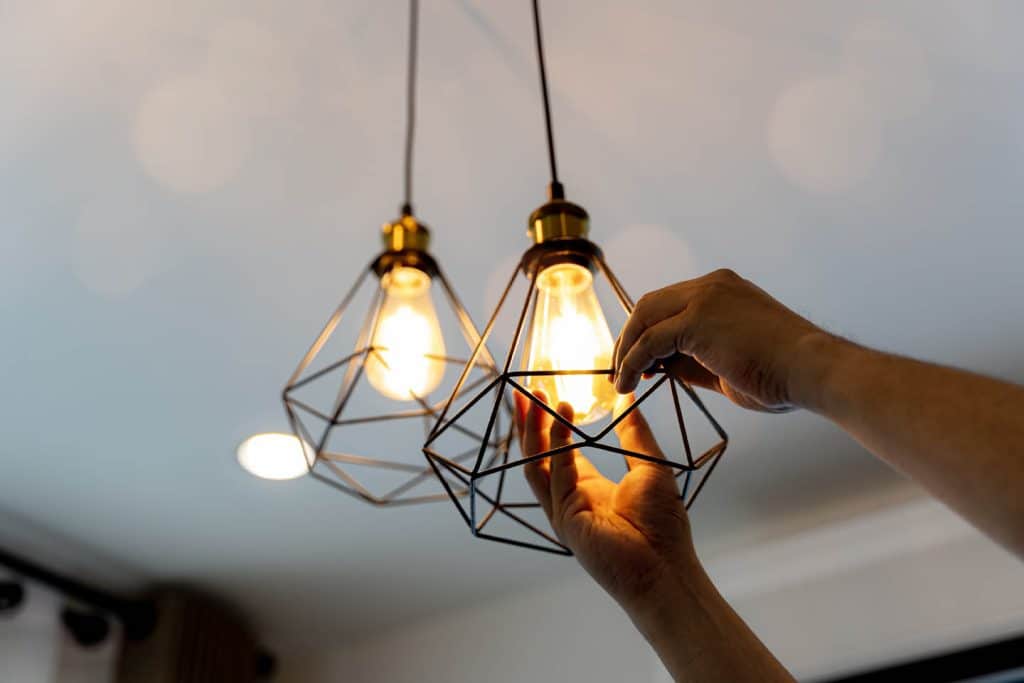
A bulb that isn’t screwed in firmly can vibrate in its socket, creating an intermittent buzz. This is more common with bayonet-cap fittings in older homes across Carlingford and Eastwood. Tightening or replacing the globe is the first thing to try.
- Vibrating filament in incandescent or halogen globes
Some globes produce a faint hum when the filament vibrates at mains frequency (50Hz). This is normal and not dangerous. If the sound is barely noticeable and doesn’t change over time, it’s typically harmless.
- Cheap or failing LED driver
The driver inside an LED globe or downlight converts mains power to the low voltage the LED chip needs. Low-quality drivers can produce a high-pitched buzz, especially as they age. Replacing the globe with a quality brand usually stops the noise.
- Loose wiring behind the fitting
This is the most concerning cause. When a wire connection at the light fitting, junction box, or switchboard is loose, electricity can arc across the gap. Arcing produces a buzzing or crackling sound and generates extreme heat. This is a fire hazard that requires immediate electrical fault-finding.
- Overloaded circuit
Too many fittings or appliances on one circuit can cause voltage fluctuations that make globes hum. Homes in Dundas Valley and Telopea with older wiring and fewer circuits are more prone to this.
More: What Does a Crackling Noise in Switches Mean
When a Buzzing Light Bulb Is Dangerous
Not every buzz deserves a call-out. But certain signs mean you should stop using the light and contact an electrician. Here is how to tell the difference:
The Sound Comes From the Wall or Ceiling, Not the Globe
If the buzzing is coming from behind the wall plate, inside the ceiling cavity, or from the switchboard rather than the globe itself, the cause is likely a wiring fault. Electricity arcing across a loose connection inside the wall generates heat and sound. This is dangerous and should be inspected immediately.
The Light Fitting Feels Hot to the Touch
A warm fit is normal. A hot fitting is not. Excessive heat at the socket, trim, or base of a downlight suggests a poor connection, an overloaded fitting, or a globe with the wrong wattage for the fixture. Overheating degrades wiring insulation and increases fire risk. Older light fittings in homes across Marsfield and Ryde are especially vulnerable if they haven’t been replaced in decades.
You Notice a Burning Smell
Any smell of burning plastic, rubber, or a hot metallic odour near a light fitting means insulation is degrading or a connection is overheating. Turn off the light at the switch immediately and call an electrician. Do not use the fitting until it has been inspected.
The Buzzing Gets Louder Over Time
A sound that starts faint and progressively gets louder indicates a worsening fault. Loose connections deteriorate further with each use as heat and vibration loosen them more. If the buzzing is getting worse, the fault is getting worse too.
The Globe Flickers While Buzzing
Buzzing combined with flickering points to an unstable connection or a dimmer fault. Intermittent contact in the wiring creates both the sound and the visual symptom. This is a stronger signal of arcing than buzzing alone.
Buzzing Globe vs Buzzing Switch: What the Source Tells You
Where the buzzing comes from changes what it means. Here is a quick comparison:
| Feature | Buzzing From the Globe | Buzzing From the Switch or Wall |
| The most common cause | Dimmer incompatibility or filament vibration | Loose wiring or arcing behind the switch plate |
| Risk level | Usually low (dimmer or globe issue) | Moderate to high (potential wiring fault) |
| DIY fix possible? | Yes, try tightening or replacing the globe | No. Wiring work requires a licensed electrician |
| Fire risk | Low unless the fitting is overheating | High if arcing is present |
| Action required | Replace the globe or upgrade the dimmer | Turn off the circuit. Call an electrician immediately |
If the sound moves with the globe when you swap it to a different fitting, the globe is the issue. If the sound stays in the fitting regardless of which globe you use, the fault is in the wiring or socket.
What You Can Safely Check at Home
Before booking a call-out, there are a few safe checks that may resolve the buzzing without professional help:
Tighten or Replace the Globe
Switch the light off at the wall. Let the globe cool. Twist it firmly into the socket. If it were loose, this may stop the buzzing entirely. If the globe is old or damaged, replace it with a new one and check whether the noise returns.
Swap the Globe to a Different Fitting
Remove the buzzing globe and install it in another light fitting elsewhere in the house. If it buzzes there too, the globe is faulty. Replace it. If the buzzing stays in the original fitting with a new globe, the problem is in the fitting or wiring.
Check the Dimmer Setting
If your lights only buzz when dimmed, turn the dimmer to full brightness. If the buzzing stops, the dimmer is the cause. An older dimmer not rated for LED loads will hum at low settings. An electrician can replace it with an LED-compatible trailing-edge dimmer.
Listen for Timing Patterns
If the buzzing happens at the same time each evening (usually around 10 pm), it may be caused by ripple control signals on the Ausgrid or Endeavour Energy network. This is a known issue in parts of Parramatta, Epping, and Ryde. A ripple filter installed on the lighting circuit resolves it.
Why Buzzing Lights Are More Common in Older Parramatta Homes
Buzzing light fittings follow the same pattern as most electrical issues in the region. Housing age, wiring condition, and original hardware all play a role:
- Original light fittings from the 1970s and 1980s
Many homes in Epping, Beecroft, and Pennant Hills still have original batten holders, downlight trims, or pendant fittings with aged sockets. Corroded or loose contacts inside these fittings create poor connections that buzz under load.
- Old halogen dimmer circuits with LED replacements
Homes across Carlingford, Denistone, and West Pennant Hills that upgraded from halogen to LED without changing the dimmer switch are the most common source of buzzing. The dimmer was never designed for the LED’s low wattage. PowerHub Electrical resolves this regularly by upgrading the dimmer and globe together. For pensioners in the area, a 15% discount applies to all electrical work.
- Ageing wiring connections in ceiling spaces
Junction boxes in the ceiling cavity of homes built before the 1990s can develop loose or corroded connections over decades. These are hidden from view but produce an audible hum or buzz when current passes through them. A full electrical safety inspection checks these hidden junctions.
- Aluminium wiring in some 1970s homes
A small number of homes in the Parramatta region used aluminium wiring, which expands and contracts more than copper. Over time, connections loosen and create buzzing and overheating at terminals.
More: How to Spot Signs of Faulty House Wiring
How a Licensed Electrician Diagnoses a Buzzing Light
When the cause isn’t obvious, a qualified electrician uses a systematic process to trace the source. Here is what a thorough diagnosis involves:
Fitting and Connection Inspection
The electrician removes the light fitting and checks the socket, wiring terminations, and junction box for signs of arcing, corrosion, or loose connections. Scorch marks, melted insulation, or discoloured terminals confirm an overheating fault.
Circuit Load and Voltage Testing
A multimeter checks whether the circuit is delivering a stable voltage. Fluctuations or drops under load indicate an overloaded circuit or a fault further back in the wiring. If the circuit is carrying more than its rated capacity, the electrician may recommend adding a dedicated lighting circuit or upgrading the switchboard.
Dimmer Compatibility Check
The electrician tests whether the dimmer matches the globe type and wattage. If the dimmer is a leading-edge type on an LED circuit, replacing it with a trailing-edge unit eliminates the buzz.
After a recent light fitting replacement in Macquarie Park, the team received this feedback: “Brian’s team helped me install a new exhaust fan and checked the broken old light. Their work was highly efficient, reasonably priced, and the communication was smooth. Highly recommended!” Lucas. That level of thoroughness is what turns a call-out into a lasting fix.
Under NSW law, you need an electrical licence before you can carry out any electrical wiring work, regardless of cost or whether the work is residential or commercial. All completed electrical work must be followed by a Certificate of Compliance for Electrical Work (CCEW), as required under the Gas and Electricity (Consumer Safety) Act 2017.
Why Hiring a Licensed Electrician in NSW Is Non-Negotiable
A buzzing light might seem like a small issue. But if the cause is loose wiring, arcing, or a circuit fault, it’s electrical work. In NSW, only a licensed electrician can legally diagnose and repair fixed electrical wiring. There are no exceptions for “minor” jobs.
Here’s why that matters. A loose connection inside a light fitting generates temperatures high enough to melt insulation and ignite timber framing. What starts as an annoying buzz can become a fire if the wrong person opens up the fitting and disturbs a damaged wire. An unlicensed repair also voids your CCEW trail, which means no compliance record and potential issues with your home insurance if something goes wrong.
Brian Ho, the lead electrician, puts it simply: “I’ve seen homes where someone tried to fix a buzzing light by opening the fitting themselves. One loose wire touching the wrong terminal can turn a $200 repair into a $20,000 insurance claim. If the sound is coming from the wall and not the globe, leave it alone and call a licensed sparky.”
When choosing an electrician for buzzing light issues, look for these basics:
- Current NSW electrical licence: Verify through the NSW Fair Trading public register. Any electrician who can’t provide their licence number on request is a red flag.
- CCEW provided after every job: A Certificate of Compliance for Electrical Work proves the job was tested and meets Australian Standards. If your electrician doesn’t hand one over, the work is not legally compliant.
- Experience with lighting circuits specifically: Buzzing can involve dimmer compatibility, driver faults, wiring issues, and ripple control. An electrician experienced with lighting installations across different housing eras will diagnose faster.
- Clear, upfront pricing: You should know what the call-out and diagnosis will cost before work begins. No surprises.
- Pensioner and first-service discounts: Electrical maintenance shouldn’t be put off because of cost. A 15% pensioner discount and $50 off for new customers makes that first call-out more accessible for households across Parramatta and surrounding suburbs.
How to Prevent Light Bulbs From Buzzing
Most buzzing is preventable with the right hardware and installation approach:
- Use LED-compatible dimmers with LED globes
Never pair an old halogen dimmer with LED lights. The mismatch causes buzzing, flickering, and shortened globe life. A trailing-edge dimmer rated for LED loads is essential.
- Choose quality globes from reputable brands
Cheap globes with low-grade drivers are the most common source of humming. Look for SAA/RCM-approved products from brands like Philips, Osram, or Crompton. The upfront cost is slightly higher, but the buzzing and early failures disappear.
- Match the globe wattage to the fitting rating
Every light fitting has a maximum wattage rating. Exceeding it causes overheating, buzzing, and insulation damage. Check the label inside the fitting before installing a new globe.
- Tighten globes properly
A loose globe vibrates in the socket. Firm contact eliminates this. Check fittings periodically, especially bayonet-cap types that can work loose with use.
- Have the wiring checked during any lighting upgrade
When replacing old fittings with new LED downlights or pendants, ask your electrician to check the junction box and wiring connections at the same time. Catching a loose connection during installation prevents a buzzing problem later. New customers receive $50 off their first service.
- Book a regular electrical inspection
An inspection every three to five years catches ageing connections, corroded terminals, and overloaded circuits before they start buzzing. This is especially important for homes in the Parramatta area that are older than 25 years.

Areas We Service
PowerHub Electrical services homes and businesses across Parramatta and the greater western Sydney region, including Epping, Carlingford, Ryde, Eastwood, Beecroft, Dundas Valley, West Ryde, Marsfield, Macquarie Park, Pennant Hills, Denistone, Telopea, West Pennant Hills, Turramurra, and Melrose Park.
Get Your Buzzing Light Checked Today
If your light bulb is buzzing and you can’t find the cause, call PowerHub Electrical on 0400 332 331. Licensed electricians, same-day service, 24/7 emergency response, and a 15% pensioner discount on all work. $50 off your first service.
Frequently Asked Questions
Can a buzzing light bulb cause a fire?
A buzzing globe caused by dimmer incompatibility or filament vibration is not a fire risk on its own. But buzzing caused by loose wiring or arcing inside a fitting creates extreme heat that can ignite surrounding materials. If the fitting feels hot or smells like burning, turn it off and call an electrician.
Should I turn off a buzzing light?
If the buzzing is faint and comes from the globe itself, it is generally safe to leave it on while you arrange a globe replacement. If the sound comes from inside the wall, the fitting is hot, or you notice a burning smell, turn the light off at the switch immediately.
Why does my light only buzz when dimmed?
The dimmer is almost certainly the cause. Older, leading-edge dimmers designed for halogen globes create an unstable current with low-wattage LED lights. Replacing the dimmer with a trailing-edge, LED-compatible model stops the buzzing in most cases.
Can loose wiring cause a light to buzz?
Yes. A loose wire at the light fitting, junction box, or switchboard creates a gap that electricity arcs across. This arcing produces a buzzing or crackling sound and generates dangerous heat. Homes in Parramatta and Epping with older wiring are most likely to develop this fault.
Why does my light buzz at the same time every night?
This is likely caused by ripple control signals from Ausgrid or Endeavour Energy. These signals are broadcast across the network at predictable times, usually late evening, and can cause LED lights to buzz or flicker. A tuned ripple filter installed on the lighting circuit fixes this.
When should I call an electrician for a buzzing light?
Call if the buzzing comes from the wall or ceiling rather than the globe, if the fitting feels hot, if you smell burning, or if the buzz is getting louder. In NSW, only a licensed electrician can legally work on fixed electrical wiring.
Can buzzing lights affect other appliances on the same circuit?
Not directly. The buzzing itself won’t damage other appliances. But the underlying cause can. A loose connection or overloaded circuit that makes one light buzz is also delivering unstable voltage to everything else on that circuit. Over time, voltage fluctuations shorten the life of sensitive electronics and appliances.