When a fuse blows, it cuts power to part of your home instantly. It’s there for protection, but figuring out which fuse is blown and what caused it can be confusing, especially if your switchboard isn’t clearly labelled.
In this guide by Powerhub Electrical, we’ll walk you through how to spot the signs of a blown fuse, check it safely, and what steps to take next. We’ll also explain why you might want to consider upgrading to a safer, more compliant system.
What Is a Fuse and What Does It Do?
Before checking your fuse box, here’s what a fuse actually does and how it protects your home:
How Fuses Work
A fuse is a simple but effective form of circuit protection. It’s designed to break the flow of electricity when there’s too much current, either from an overload or a short circuit. Inside the fuse is a thin wire that melts or snaps when the current exceeds its safe limit. This stops power flowing through the circuit, helping prevent overheating, fire, or electrical damage.
In Australian homes, especially those built before the 1990s, you’ll still find:
- Ceramic rewireable fuses
- Plug-type fuses with wire inserts
- Cartridge-style fuses in glass holders
While they can still do the job, they’re not as quick, safe, or reliable as modern safety switches and circuit breakers.
Fuse vs Breaker
Fuses and circuit breakers serve the same core purpose: protecting your electrical wiring. But they do it in different ways:
- Fuses must be replaced after they blow
- Breakers can be reset with a simple switch flick
Circuit breakers also react faster, are more durable, and can be combined with RCD protection to protect people from electric shock, not just wiring from overload. This is now a requirement under the AS/NZS 3000:2018 Wiring Rules for any new circuit or upgrade in NSW.
Where Fuses Are Still Used
In NSW, older homes, particularly those built before 1985, may still be running ceramic fuse boards. These are commonly found in:
- Federation and post-war homes in the Inner West
- Older weatherboard homes in Central Coast and Blue Mountains regions
- Rural properties and sheds not yet upgraded to breaker boards
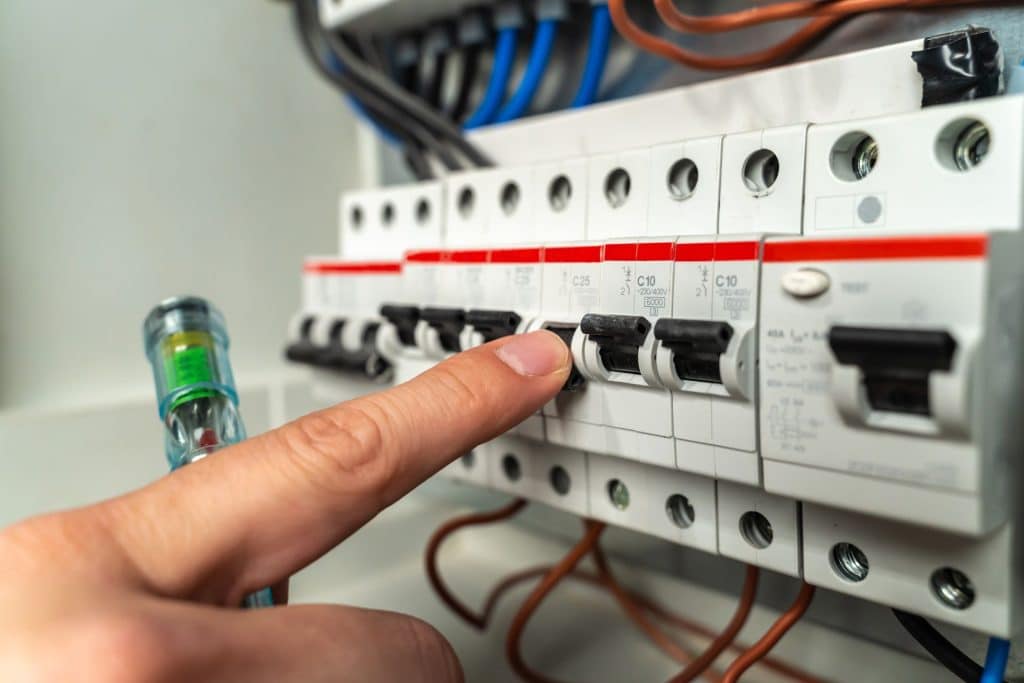
If your switchboard contains white ceramic holders with a small inspection window or fuse wire visible, you’re dealing with an older fuse-based setup.
Common Signs a Fuse Has Blown
These warning signs usually point to a blown fuse:
Partial Power Loss
If the lights go out in one room, or a certain part of the house suddenly loses power while the rest is fine, a blown fuse is a likely cause. Unlike a total blackout (which affects your whole property), a single fuse blowing will only take out the circuit it’s protecting, such as:
- Kitchen outlets
- Bedroom lighting
- Garage or outdoor power
Burning Smell or Heat
A faint burnt smell near your switchboard or heat around the fuse holder often means the fuse has blown—or is about to. Overheating can also indicate:
- Loose terminal screws
- Undersized fuse wire
- Excessive current flow
These issues can cause fuses to blow repeatedly and could be dangerous if ignored.
Flickering or No Lights
Flickering lights or lights that won’t switch on are sometimes linked to a faulty bulb, but if multiple lights go out at once, a blown fuse on the lighting circuit is a likely suspect. In older homes with separate lighting fuses, this is a common callout for NSW sparkies.
Discoloured or Cracked Fuse
Open your fuse box and check the ceramic fuse holders. If one looks blackened, cracked, or slightly melted, it’s blown or has overheated. Some fuses even have an inspection window or indicator that turns dark when the fuse wire is broken.
If you’re unsure or it looks damaged, don’t touch it. The terminals behind the fuse could still be live. Always isolate the main switch before inspecting (we’ll walk through that next).

How to Check If a Fuse Has Blown (Step-by-Step)
If you’re comfortable doing a basic visual check and your home still uses a fuse board, this section will help you safely confirm whether a fuse has blown. Just remember: if anything looks burnt, melted, or exposed, or you’re not 100% confident, call a licensed electrician. NSW laws prohibit unlicensed electrical work beyond basic like-for-like fuse replacement.
Step 1 – Shut Off Main Power
Before you touch anything in your switchboard, shut off the main power supply. This switch is typically labelled “MAIN SWITCH” and will isolate power to the entire board.
Why this matters:
Even though a fuse may appear blown, the wiring behind the ceramic or plug base may still be live. Turning off the main power reduces your risk of electric shock.
Step 2 – Find the Affected Circuit
Think about which part of your home lost power. That’s your clue to which fuse may be blown. If it was:
- Just the lights — check the lighting circuit fuse
- Just kitchen power points — check the kitchen socket fuse
- Everything — check the main fuse (often on older switchboards or poles)
Fuses are usually grouped and sometimes labelled. In older NSW fuse boards, you might see vague labels like “PLUG” or “LIGHTS.” If there’s no labelling, it’s best to call an electrician rather than guess.
Step 3 – Carefully Remove the Suspected Fuse
Once the main switch is off, you can remove the fuse by:
- Pulling out the plug-style fuse (with ceramic body and terminals)
- Unscrewing the fuse cap if it’s a rewirable type
- Gently removing the glass cartridge from its clips (if applicable)
Be careful not to force it, if it feels stuck, stop and call a professional.
💡 Tip: If the fuse crumbles, sparks, or falls apart when you remove it, your switchboard is likely overdue for an upgrade.
Step 4 – Inspect the Fuse Wire or Cartridge
Now that the fuse is out, check the internal fuse wire or metal strip. A blown fuse will show:
- A visible break or gap in the wire
- A cloudy or blackened glass case
- Burn marks on the contacts or ceramic base
- Loose wire that’s melted or come apart
Plug-in fuses often have a viewing window that goes dark when blown. In cartridge fuses, look for the thin metal strip—if it’s broken or burnt, it’s blown.
Step 5 – Replace with the Correct Fuse Rating
You must only replace the fuse with one that matches the original amp rating. In most NSW homes, common fuse ratings are:
- 10A for lighting circuits
- 15A or 20A for power points
- 32A for electric stoves or hot water systems
Never upgrade the fuse rating “just so it won’t blow again.” Doing this creates a serious fire risk and is illegal under Australian electrical standards.
If you’re unsure of the correct fuse size or type, don’t guess—call a licensed electrician. They can also confirm whether your entire board still complies with AS/NZS 3000 wiring standards.
Why Fuses Blow: Common Causes
These are the most frequent reasons fuses blow in homes across NSW. Understanding the cause can help prevent repeated trips and identify potential electrical hazards:
- Circuit Overload: Too many appliances on one circuit draw more current than the fuse rating allows, triggering it to blow as a safety measure.
- Short Circuit: Contact between active and neutral wires causes a sudden surge, usually due to damaged wiring or faulty outlets.
- Faulty Appliance: Devices like fridges, dishwashers, or water heaters with internal faults can trip fuses repeatedly, even when used alone.
- Moisture or Water Ingress: Water in sockets or fittings, often after rain or in wet areas, can cause earth leakage and blow the fuse instantly.
Dangers of DIY Fuse Replacement
Replacing a fuse might seem simple, but here’s why it’s not worth the risk:
- Switchboards Can Still Be Live: Older NSW boards can have live wiring behind the fuse even with the main switch off. You could be exposed to dangerous voltage without knowing it.
- Risk of Electric Shock: Ceramic fuses expose terminals during removal. Without proper isolation or tools, you’re putting yourself at serious risk.
- Wrong Fuse Size = Fire Risk: Oversizing a fuse (e.g. replacing 10A with 20A) may stop it blowing, but it allows unsafe current through your wiring, which can cause overheating and fire.
- Insurance May Be Void: DIY electrical repairs can void your home insurance if something goes wrong. Insurers expect licensed work, not self-fixes.
- It’s Illegal in NSW: Under NSW law, only licensed electricians can legally carry out electrical installation or modification. DIY fuse repairs aren’t allowed.
- You’re Liable if Someone Gets Hurt: If faulty work causes injury, you could be held legally responsible—even if it was done in your own home.
When to Upgrade from Fuses to Circuit Breakers
Still using ceramic fuses in your switchboard? Here’s why a professional upgrade could save you time, money, and a potential safety incident:
Outdated Safety Standards
Older fuse boxes don’t meet current electrical safety standards like AS/NZS 3000:2018. They don’t offer proper protection against earth faults or electric shock. These panels were never designed for today’s high-load appliances and may pose a serious fire risk if overloaded.
No RCD Protection
Most fuse boards lack safety switches (RCDs), which are now mandatory on all new and modified circuits in NSW homes. Without RCDs, your electrical system may not trip fast enough to prevent injury or fatal shock in the event of a fault.
Slower and Riskier to Reset
When a fuse blows, you can’t just flick it back on—you need to inspect or replace the fuse manually, often while handling exposed wiring. Modern circuit breakers trip instantly and can be reset safely with a switch.
Risk to Insurance and Compliance
Many insurance providers in NSW require homes to have compliant switchboards with safety switches. If an electrical fire occurs and your home still runs on outdated fuse protection, you may find your insurance claim denied.
Safer and More Convenient
Upgrading to a modern switchboard means safer power control, faster fault identification, and easier maintenance. It’s especially important if you’ve added high-demand items like solar inverters, EV chargers, or ducted air conditioning.
Need Help with a Blown Fuse or Switchboard Upgrade in Sydney?
Call Powerhub Electrical on 0400 332 331 for same-day fuse replacement, fault finding, or full switchboard upgrades. We service homes across Sydney with fast, safe, and fully compliant electrical solutions, done right the first time.
Frequently Asked Questions
Can I replace a fuse myself in NSW?
Yes, but only if it’s a like-for-like fuse and you don’t touch or modify any wiring. Anything beyond that, like upgrading fuses, rewiring, or modifying the switchboard, must be done by a licensed electrician.
What fuse size should I use?
Always match the original fuse rating for that circuit. In most homes, it’s 10A for lighting, 15A–20A for power outlets, and 32A for ovens or water heaters. Using the wrong size is dangerous and illegal.
Why does my fuse keep blowing repeatedly?
There’s likely a deeper issue: faulty wiring, a damaged appliance, or overloaded circuits. Replacing the fuse won’t fix the root cause. It’s best to have the circuit tested professionally.
Is it worth upgrading from fuses to breakers?
Yes. Modern circuit breakers are safer, faster to reset, and include RCD protection. Fuse boards are outdated, harder to maintain, and may fail to protect against electric shock.
Will upgrading my fuse box increase my property value?
Yes, especially in older homes. A modern switchboard improves safety, complies with current standards, and is seen as a valuable upgrade by buyers and renters.