Power keeps tripping because of a faulty appliance, overloaded circuit, damaged wiring, or moisture in electrical connections. The safety switch detects the fault and shuts off the supply to prevent electrocution or fire. Homes built before the 1980s across Sydney’s northern suburbs are the most commonly affected.
Ageing switchboards with outdated protection devices make the problem worse, especially when modern appliance loads exceed what the original wiring was designed for. PowerHub Electrical provides same-day fault finding and repairs across Epping, Parramatta, and surrounding suburbs. This guide covers the most common causes, how to diagnose the issue safely, and when to call a licensed electrician.
Understanding Why Power Trips Happen in Sydney Homes
A tripping safety switch is your home’s way of telling you something is wrong. The device detects an imbalance in electrical current, typically caused by electricity leaking to earth through damaged wiring, moisture, or a faulty appliance, and shuts the circuit off in milliseconds. Circuit breakers work differently, tripping when a circuit draws too much current or when a short circuit occurs.
The distinction matters because the fix depends on which device is tripping. According to SafeWork NSW’s guidance on residual current devices, an RCD is designed to protect people from electrocution, while a circuit breaker protects wiring from overheating and catching fire. Many older switchboards in suburbs like Eastwood, Carlingford, and Beecroft still rely on ceramic fuses or basic MCBs without any RCD protection at all, which means faults go undetected until they cause real damage.
Ausgrid, the network distributor covering Epping and Sydney’s north, services 1.8 million customers across 22,275 square kilometres. Equipment faults remain the most common cause of supply interruptions on the network. But when the problem is inside your home rather than on the street, it’s your responsibility to fix.

Common Causes When Your Power Keeps Tripping
Most tripping issues come down to one of six causes. Identifying which one applies to your situation helps you decide whether it’s a quick fix or a job for a professional.
- Faulty or damaged appliance. A worn heating element, frayed cord, or moisture inside an appliance creates an earth leakage path that trips the RCD instantly. Older fridges, washing machines, and electric ovens are the most common culprits. If the tripping started when you plugged in or switched on a specific device, that’s your answer.
- Overloaded circuit. When too many high-draw appliances share a single circuit, the total current exceeds the circuit breaker’s rating and it trips. This is common in older Epping and Denistone homes where original wiring was designed for far fewer appliances than a modern household uses. According to the AS/NZS 3000:2018 Wiring Rules, each circuit must be rated to handle the expected maximum demand.
- Damaged or deteriorating wiring. Rubber-sheathed wiring installed in homes built in the 1950s to 1970s degrades over time. The insulation cracks, exposes conductors, and creates earth leakage faults that trip the RCD. Suburbs like Dundas Valley and Telopea, where a significant portion of housing stock dates to this era, see this regularly.
- Moisture and water ingress. Rain getting into outdoor power points, bathroom exhaust fan wiring, or subfloor junction boxes causes earth leakage and trips the safety switch. This explains why your power might be tripping at night after an afternoon storm, as water slowly migrates into connections.
- Nuisance tripping from ageing RCDs. Safety switches themselves wear out. An RCD older than 10 years can become overly sensitive and trip without a genuine fault. The device is doing its job incorrectly, which is just as problematic as not doing it at all.
- Short circuit in the wiring. Active and neutral conductors touching each other, often inside a damaged cable or at a faulty connection point, draws a massive current spike that trips the circuit breaker immediately. This is a serious fault that creates a fire hazard and needs urgent attention.
How To Diagnose Which Circuit Is Tripping
Before calling an electrician, there are a few safe steps you can take to narrow down the problem. This can save time and money by giving the tradesperson a head start on the diagnosis.
Check Your Switchboard First
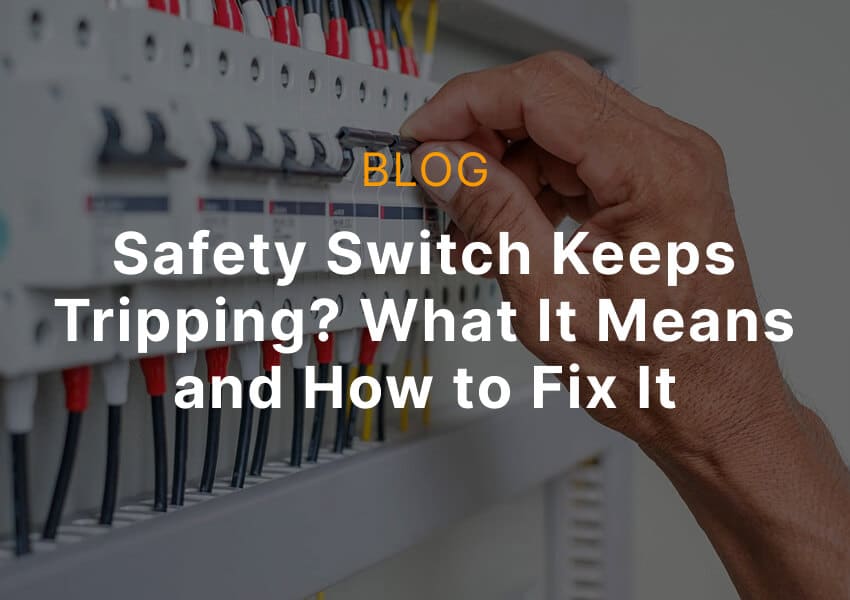
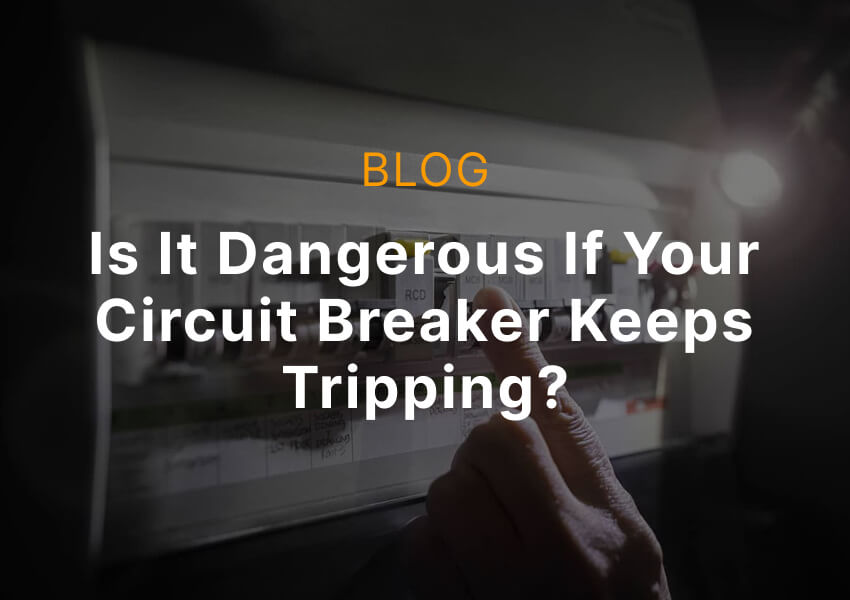
Open your switchboard and look for the device that’s in the off position. If it’s a safety switch (usually labelled RCD or marked with a “T” for test), the fault is an earth leakage issue. If it’s a circuit breaker (labelled by area, like “lights” or “power”), the fault is either an overload or a short circuit. Modern switchboards with RCBOs combine both functions in one device per circuit, making it easier to isolate which area is affected.
Unplug Everything on the Affected Circuit
Switch off and unplug every appliance on the tripping circuit. Reset the safety switch. If it stays on, plug appliances back in one at a time until it trips again. The last appliance you connected is likely faulty. This is the simplest way to confirm whether your tripping is caused by a specific appliance.
Test Appliances in a Different Outlet
If you suspect a particular appliance, plug it into a power point on a different circuit. If the safety switch trips again, the appliance is faulty. If it works fine, the problem is likely in the wiring or power point on the original circuit. Disconnect the faulty appliance and don’t use it until it’s been repaired or replaced.
When the Switch Trips With Nothing Plugged In
If the RCD keeps tripping even with everything unplugged, the fault is almost certainly in the fixed wiring, a light fitting, or a hardwired appliance like a hot water system or cooktop. This is not something you can diagnose yourself safely. It requires a licensed electrician with insulation resistance testing equipment.

When Tripping Becomes an Emergency
Not every trip is urgent, but some situations demand immediate action. Knowing the difference protects your family and your home.
Burning Smell From the Switchboard
A burning or acrid smell near your switchboard indicates overheating connections, melting insulation, or arcing. Turn off the main switch immediately and call an emergency electrician. According to Fire and Rescue NSW, over 350 residential fires in NSW each year are caused directly by electrical faults. A burning switchboard is a fire in progress.
The Safety Switch Trips Immediately After Resetting
If the switch trips the instant you push it back on, there’s an active fault on the circuit. Do not force it back on repeatedly. Each reset attempt re-energises the fault and increases the risk of fire or shock. Leave the switch off and call a licensed professional.
Sparking or Scorch Marks at Power Points
Visible sparking, brown or black marks around a power point, or a warm faceplate all indicate a loose or damaged connection. Switch off the circuit at the switchboard and avoid using that outlet. Loose connections generate heat through arcing, and according to NSW Fair Trading, they’re one of the leading causes of residential electrical fires.
Tingling Sensation When Touching Appliances
If you feel a tingle or mild shock when touching a metal appliance, tap, or surface, there’s an earth fault in the circuit. This is a direct electrocution risk. The safety switch should catch this, but if it hasn’t tripped, your switchboard may lack adequate RCD protection. In NSW, only a licensed electrician can legally perform electrical wiring work, and this is exactly the kind of situation where that matters.
Why Tripping Is More Common in Older Sydney Suburbs
The age and condition of your home’s electrical system plays a bigger role than most homeowners realise. Several factors specific to Sydney’s northern suburbs make tripping a recurring issue.
- Post-war housing stock in Epping, Eastwood, and Carlingford. Many homes in these suburbs were built between the 1940s and 1970s. According to the 2016 ABS Census, 55.5% of dwellings in Epping were separate houses, many of which still have their original switchboards. Wiring from this era was rated for a fraction of the electrical load a modern household draws.
- Rapid unit development in Macquarie Park and Marsfield. High-density developments place greater demand on older street-level infrastructure. Voltage fluctuations from the network can cause sensitive RCDs to nuisance-trip, particularly during peak usage times.
- Tree canopy and storm exposure in Pennant Hills and West Pennant Hills. Dense vegetation combined with overhead power lines means storm debris frequently causes network-level faults. While these are Ausgrid’s responsibility, the power surges that occur when supply is restored can trip safety switches inside your home.
- Humidity and subfloor moisture in Beecroft and Turramurra. Properties near bushland with limited airflow beneath timber floors trap moisture. This moisture migrates into junction boxes and cable connections, causing intermittent earth leakage that trips RCDs unpredictably, often at night when temperatures drop.
- Mixed network boundaries across the service area. Epping falls within the Ausgrid distribution network, while Parramatta and western suburbs are covered by Endeavour Energy. Each provider has different infrastructure ages and maintenance schedules, which can affect supply quality and contribute to tripping caused by external voltage events.

How a Licensed Electrician Diagnoses and Fixes Tripping
When the cause isn’t obvious, a qualified electrician uses a systematic process to find and fix the fault. Understanding what to expect helps you assess whether you’re getting thorough service.
Visual Switchboard Inspection
The electrician starts by inspecting the switchboard for obvious signs of damage, including scorch marks, corrosion, loose wiring, and outdated components like ceramic fuses. If the board still uses rewirable fuses or basic MCBs without RCD protection, a switchboard upgrade is usually recommended before any other work begins.
Circuit-by-Circuit Isolation Testing
Each circuit is tested individually using a process of elimination. The electrician switches off all circuits, then re-enables them one at a time while monitoring for the fault. This identifies which specific circuit is causing the tripping.
Insulation Resistance and Earth Leakage Testing
Using a megger (insulation resistance tester), the electrician measures the condition of the wiring insulation on the faulty circuit. A reading below the minimum threshold set by AS/NZS 3000 confirms degraded insulation and pinpoints where the fault lies. Earth leakage clamp meters can further isolate the exact cable or connection at fault.
Repair or Replacement
Depending on the diagnosis, the fix could be anything from tightening a loose connection to replacing a section of wiring or installing a new safety switch. Every repair must be tested and a certificate of compliance for electrical work (CCEW) issued to the homeowner, as required by NSW Fair Trading. Any electrician who doesn’t provide this certificate is not meeting their legal obligation.
How To Prevent Your Power From Tripping
Most tripping issues are preventable with basic maintenance and a few smart habits. These steps won’t fix existing faults, but they’ll reduce the chance of new ones developing.
- Test your safety switch every three months. Press the “T” button on each RCD in your switchboard. It should trip instantly and reset cleanly. According to NSW Fair Trading, regular testing is the single most effective way to confirm your safety switches are working. If the switch doesn’t trip when tested, it’s faulty and needs replacement.
- Avoid daisy-chaining power boards. Plugging one power board into another bypasses the circuit’s load rating and creates a serious overload risk. Fire and Rescue NSW identifies overloaded power boards as a leading cause of electrical fires. If you’re running out of outlets, it’s time to install additional power points.
- Replace appliances with frayed or cracked cords. Damaged cords are one of the most common causes of earth leakage tripping. Don’t tape over damage, replace the cord or the appliance entirely.
- Keep outdoor power points and connections weatherproof. Check that covers and seals on external outlets are intact, especially before storm season. Moisture getting into connections is a frequent cause of intermittent tripping.
- Get an electrical safety inspection every 5 to 10 years. For homes older than 25 years, a periodic electrical safety inspection checks wiring condition, switchboard adequacy, and earth system integrity. It’s the best way to catch problems before they start tripping your power or, worse, cause a fire.
- Upgrade your switchboard if it still has ceramic fuses. If your switchboard doesn’t have modern RCBOs protecting each circuit individually, you’re missing the level of protection that current Australian standards recommend. An upgraded board also handles modern electrical loads without constant tripping.
Areas We Service
Our licensed electricians service Epping and the broader Parramatta region, including Beecroft, Carlingford, Denistone, Dundas Valley, Eastwood, Macquarie Park, Marsfield, Melrose Park, Pennant Hills, Turramurra, Telopea, West Pennant Hills, and West Ryde. Same-day service available across all suburbs.

Get Your Tripping Power Fixed Today
If your power keeps tripping and you can’t pin down the cause, call PowerHub Electrical on 0400 332 331 for same-day diagnosis and repair. $50 off your first service, with a lifetime labour warranty on all installations. Licensed, insured, and available 24/7 for emergencies across Epping and surrounding suburbs.
Frequently Asked Questions
Why does my power keep tripping for no reason?
There’s always a reason, even if it’s not obvious. The most common hidden causes are degraded wiring insulation, moisture in a junction box, or a failing appliance with intermittent earth leakage. A licensed electrician can identify the fault using insulation resistance testing.
Can a faulty appliance trip the safety switch?
Yes. A faulty appliance is the single most common cause of RCD tripping in residential homes. Older fridges, washing machines, and electric heaters with worn elements or damaged cords frequently cause earth leakage that the safety switch detects.
Why does my safety switch keep tripping at night?
Night-time tripping is often caused by moisture. As temperatures drop in suburbs like Turramurra and Beecroft, condensation forms inside outdoor fittings, subfloor wiring, or appliances like dishwashers running on delay timers. Refrigerator defrost cycles are another common overnight trigger.
Should I keep resetting my safety switch if it keeps tripping?
No. If the switch trips more than twice in a row, stop resetting it. Repeated resetting re-energises the fault each time and increases the risk of fire or electrical shock. Leave the circuit off and call a licensed electrician to diagnose the issue.
What’s the difference between an RCD and a circuit breaker?
An RCD (safety switch) detects earth leakage current and protects people from electrocution. A circuit breaker (MCB) detects overcurrent and short circuits, protecting wiring from overheating. Modern RCBOs combine both functions in one device per circuit, which is why electricians across Sydney recommend them during switchboard upgrades.
How often should I test my safety switch?
Every three months. Press the “T” button on each RCD or RCBO in your switchboard. It should trip immediately and reset without issue. If it doesn’t trip, the device has failed and needs urgent replacement by a licensed electrician.