February 24, 2026

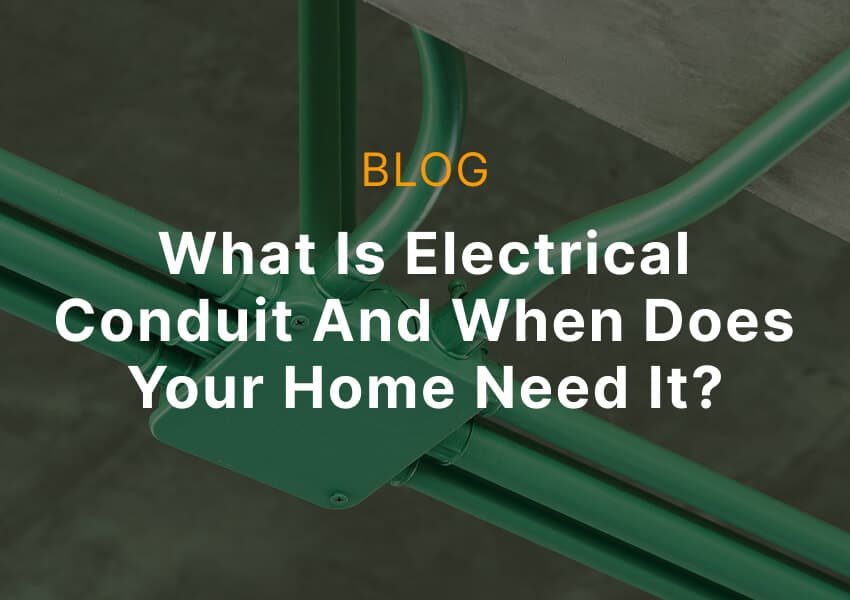
What Is Electrical Conduit And When Does Your Home Need It?

Electrical conduit is a protective tube or pipe that shields electrical cables from physical damage, moisture, UV exposure, and pests. Australian homes most commonly use PVC conduit in grey medium-duty for surface-mounted indoor runs and orange heavy-duty for underground burial, both governed by AS/NZS 2053. Not every wiring job requires conduit, but outdoor circuits, underground […]

What Is Electrical Conduit And When Does Your Home Need It? Read More »
Do You Need A Switchboard Replacement? Signs To Look For

You likely need a switchboard replacement if your board has ceramic fuses, no safety switches, frequent tripping, a burning smell, or is more than 25 years old. Homes across Sydney’s northern suburbs built before the 1980s are the most commonly affected due to ageing electrical infrastructure. Modern households draw far more power than original boards

Do You Need A Switchboard Replacement? Signs To Look For Read More »

Why Does My Power Keep Tripping? Common Causes And Fixes

Power keeps tripping because of a faulty appliance, overloaded circuit, damaged wiring, or moisture in electrical connections. The safety switch detects the fault and shuts off the supply to prevent electrocution or fire. Homes built before the 1980s across Sydney’s northern suburbs are the most commonly affected. Ageing switchboards with outdated protection devices make the

Why Does My Power Keep Tripping? Common Causes And Fixes Read More »

Legal Responsibilities for Owner/Controller of Premises

Who is classified as the controller of the premises?

As per the Code of Practice for the Management and Control of Asbestos in Workplaces [NOHSC:2002(2005)], the “person with control” may be:

  • The owner of the premises
  • A person who has under any contract or lease an obligation to maintain or repair the premises
  • A person who is occupying the premises
  • A person who is able to make decisions about work undertaken at the premises
  • An employer at the premises

Persons with control of premises have a duty of care to:

  • Develop, implement and maintain an asbestos management plan.
  • Investigate the premises for the presence or possible presence of asbestos-containing material
  • Develop and maintain a register of the identified or presumed asbestos-containing material, including details on their locations, accessibility, condition, risk assessments, and control measures.
  • Develop measures to remove the asbestos-containing materials or otherwise to minimize the risks and prevent exposure to asbestos
  • Ensure the control measures are implemented as soon as possible and are maintained as long as the asbestos-containing materials remain in the workplace.